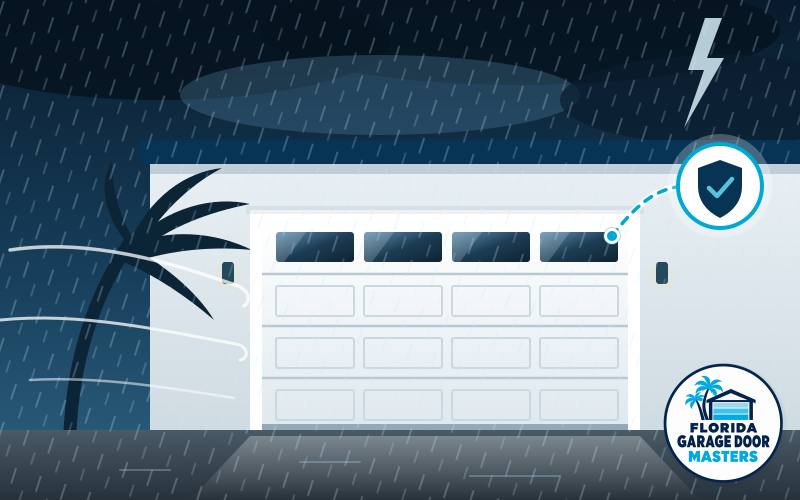
For many South Florida homes, the garage door is the largest opening in the house and the one most likely to fail in a hurricane. When it gives way, wind rushes inside and pushes up on the roof from below. That is why Miami-Dade and Broward sit in Florida's High Velocity Hurricane Zone (HVHZ), with some of the strictest garage door rules in the country.
1. Find out if your door is rated
A door built for the HVHZ carries a product approval label, usually a sticker on the inside edge of a door section or on the track. It lists the approval number (for example a Miami-Dade Notice of Acceptance, or NOA) and the design wind pressure the door was tested for. No label, a door older than your home's last major code update, or a door added without a permit are all signs it may not be rated.
- Look for the label on the end stile or bottom section
- Write down the NOA or Florida Product Approval number
- Keep a photo of the label with your insurance papers
2. Know your options if it is not rated
You generally have two choices: install a garage door bracing kit approved for your door, or replace the door with a wind-load or impact-rated model. In Miami-Dade, a replacement door normally needs a permit and an approved product. See our hurricane impact garage door page for what a compliant installation includes.
3. Pre-season checklist (do this in May or June)
- Run the door up and down: it should move smoothly and quietly
- Look for rust, frayed lift cables or loose bolts on hinges and brackets
- Check that the bottom seal is intact (it keeps out wind-driven rain)
- Test the opener's battery backup, if you have one, by unplugging the opener
- Make sure the manual release works so you can open the door in a power outage
- Clear space inside the garage so a bracing kit or door can be installed quickly
4. When a storm is coming
- Close the door fully and lock it; never leave it partly open
- Install bracing (if your door uses it) before winds pick up
- Unplug the opener to protect it from power surges
- Move cars and loose items away from the door
5. After the storm
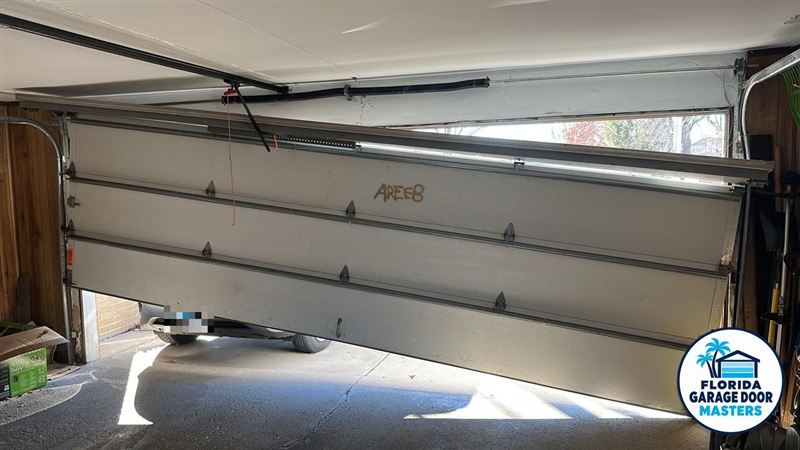
Do not force a door that is bent, off its track or hanging crooked. Springs and cables hold hundreds of pounds of tension. Photograph any damage for your insurance claim and call for an emergency inspection.
Insurance and savings
In Florida, a wind mitigation inspection documents opening protection such as a rated garage door, and many insurers give premium credits for it. Ask your insurance agent what your policy offers. Florida's My Safe Florida Home program has also offered inspections and matching grants for qualifying homeowners; check the program's official site for current availability.
Related services
Frequently asked questions
Is my garage door hurricane rated?
Look for a product approval label on the inside edge of a door section or on the track. It lists the approval number (such as a Miami-Dade NOA) and the tested wind pressure. If there is no label, have a technician check the door.
Can I brace my existing garage door instead of replacing it?
Many doors can use an approved bracing kit, but the kit must be approved for that door and installed correctly. If your door is old or damaged, replacement with an impact-rated door is often the better choice.
Do I need a permit to replace a garage door in Miami-Dade?
Replacing a garage door in Miami-Dade generally requires a building permit and an approved, wind-load-rated product. A licensed installer can help with the paperwork.
We serve North Miami and nearby cities including North Miami, North Miami Beach, Aventura, Miami Gardens, Miami Shores, Sunny Isles Beach, Biscayne Park, Bal Harbour and more.