Spring repair for torsion and extension doors
The springs are what really lift a garage door. They offset its weight so the opener, or your arm, only has to steer it. Once a spring snaps, that weight is back all at once, and the door either stays on the floor or creeps up a few inches and quits.
We repair both kinds of spring: torsion springs on the shaft above the door, and extension springs that stretch beside the overhead tracks. Each spring we fit is sized to your door. We also look at what a breaking spring tends to damage on its way out, such as the cables, the drums and the opener.
We do this across Miami-Dade and Broward, and a broken spring in Miami Lakes gets the same careful measuring as one in Coral Gables or Pembroke Pines.
Torsion or extension: which springs your door uses
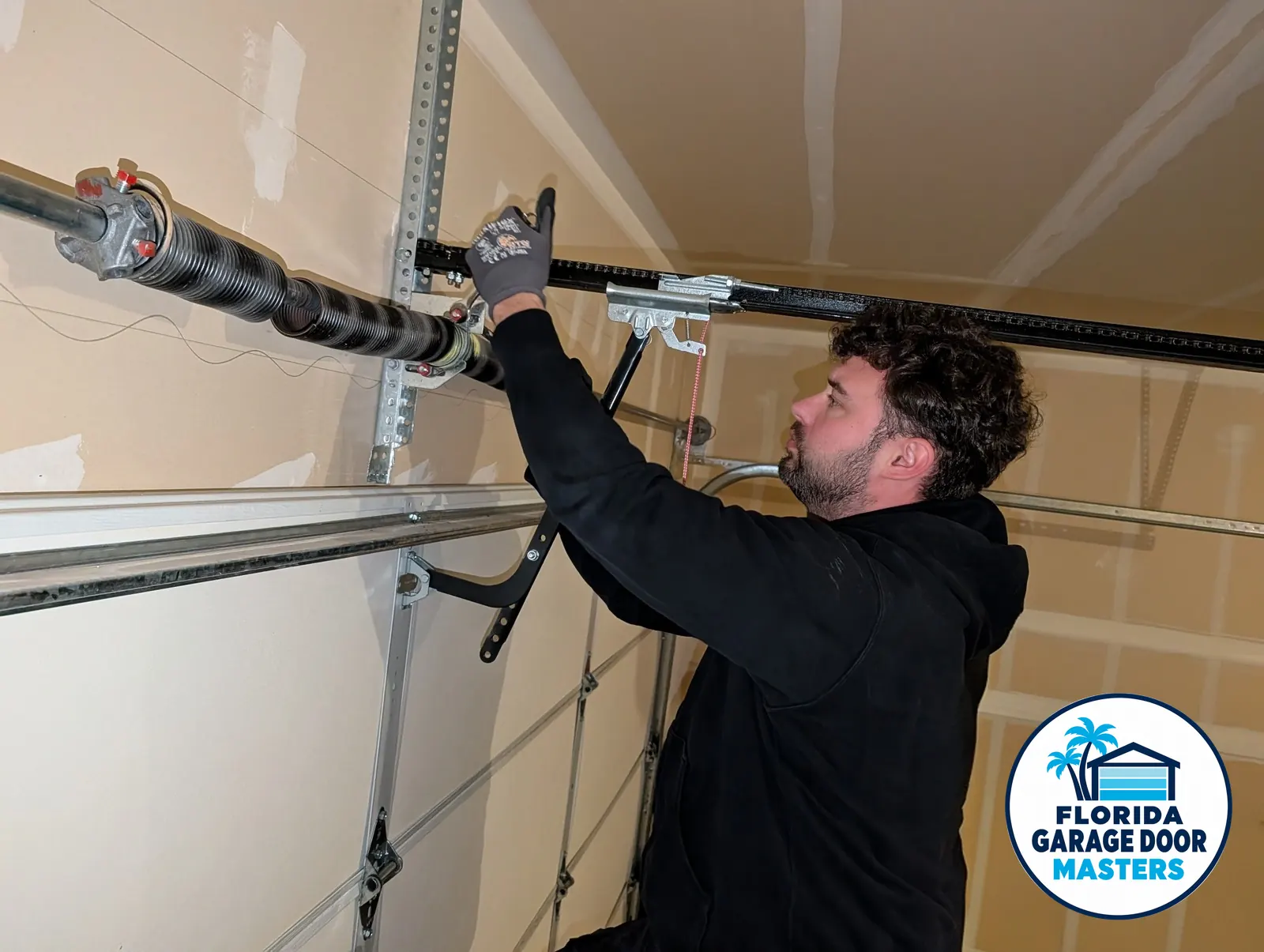
A torsion spring is a thick coil on a steel shaft just above the closed door. As the door comes down, the coil winds tighter. As it goes up, the coil relaxes and turns the cable drums at both ends of the shaft. Lighter doors may have one torsion spring; wider or heavier doors often have two.
Extension springs hang along the overhead tracks, near the ceiling, and stretch as the door closes. They work in pairs, one per side. Each one should have a safety cable, also called a containment cable, threaded through its center, so a spring that snaps stays on that cable instead of flying loose.
Springs are rated in cycles, one cycle being a single trip up and back down. A standard spring is often rated for about 10,000 of them, and a busy door uses them up far sooner than one opened each morning and evening.
How a broken or tired spring shows itself
A spring that has just snapped is usually easy to spot once you know where to look:
- A bang like a firecracker from the garage, often when nobody was touching the door.
- A gap of a few inches between the coils of a torsion spring above the door.
- An extension spring hanging slack, or the door tilting toward one side.
- A door that suddenly feels far too heavy by hand, or that lifts a hand's width and gives up.
- An opener that labors, hums or reverses as soon as the door starts to rise.
A spring that is only worn out gives quieter signs: the door feels heavier than it used to, and the opener sounds like it is working harder.
For what to do in the first minutes after a spring goes, see our broken spring guide. If the door simply won't move and you are not sure why, why a garage door won't open walks through the other causes.
What a spring repair involves
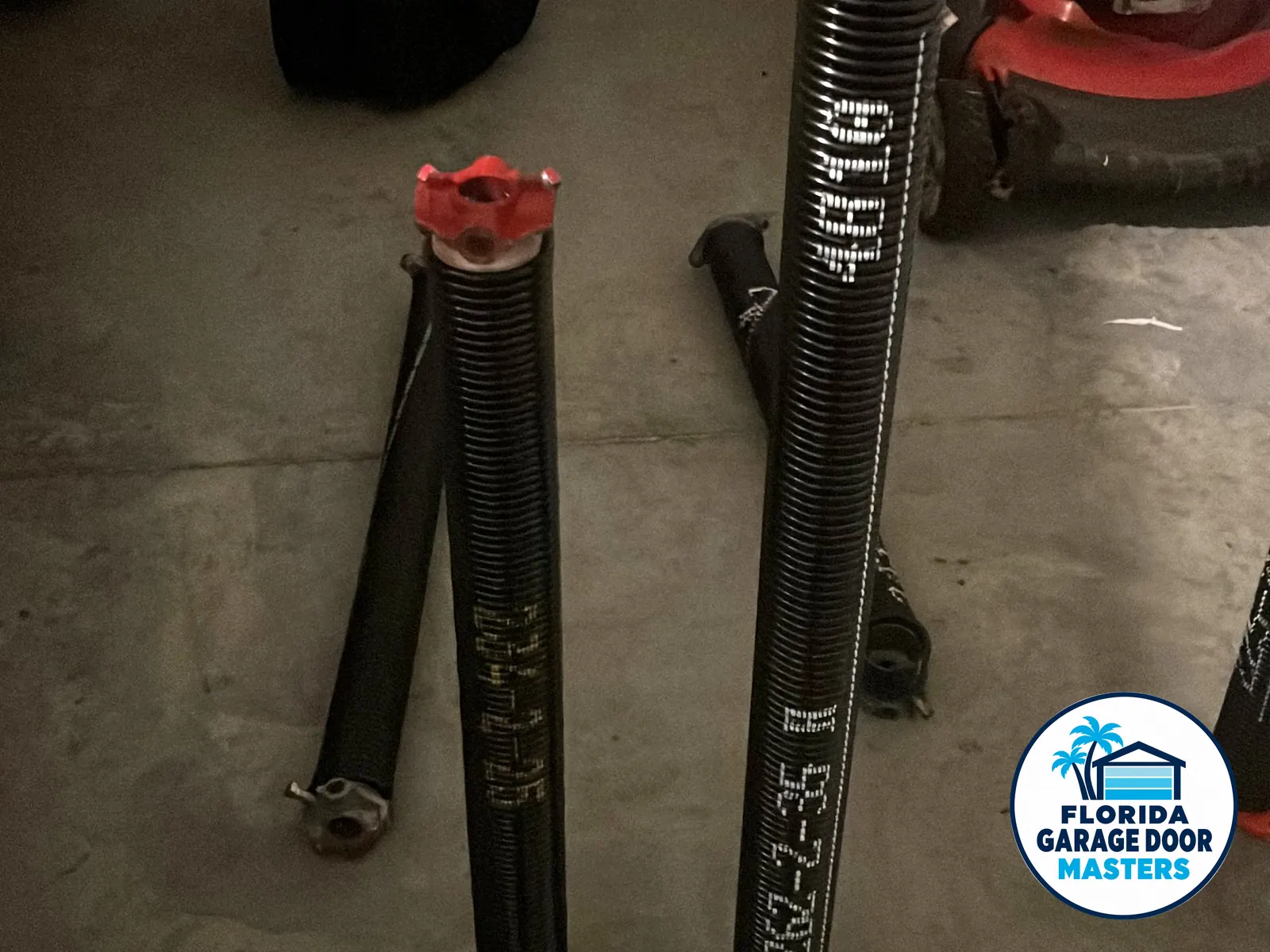
We clamp the door so it can't move, take the tension off what is left of the old spring, and measure it. Wire size, length and inside diameter all have to suit the weight of the door. A spring that is too weak or too strong leaves the door hard to move and strains the opener.
We carry the common spring sizes, so many repairs are finished on the first visit. Same-day service is available. The work carries our 1-year labor warranty.
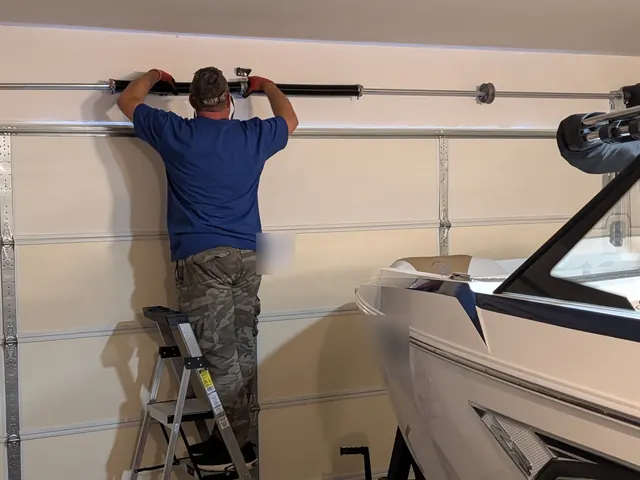
On a door with two torsion springs, swapping both at once often makes sense: they have run the same number of cycles, so the survivor is often near its end too. We tell you what we see and you choose.
On extension springs, we thread a safety cable through each spring that lacks one. We also check the lift cables, drums and bearings, because a spring that lets go often throws a cable off its drum. If one was damaged, we show you before touching it; the work is described under cable repair.
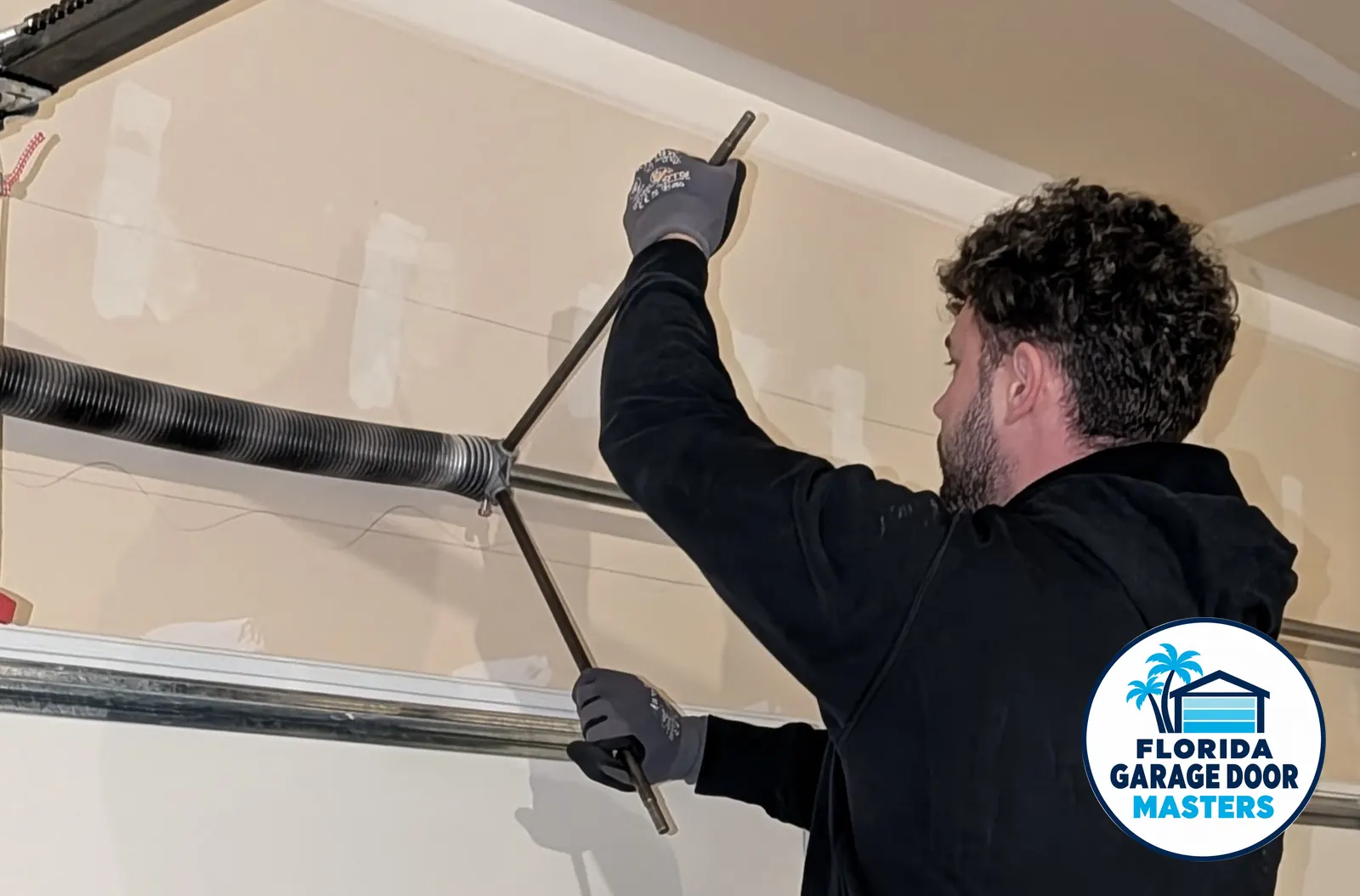
Last comes the balance test. With the opener unhooked, the door should hold still about halfway up. We adjust the tension until it does, lubricate the coils, then reconnect the opener and check the sensors and the auto-reverse, which sends a closing door back up when it meets something.
Why springs are never a do-it-yourself job
A wound torsion spring stores enough force to cause serious injury, and all of it comes out at once if a tool slips. The set screws, the winding cones and the bottom brackets are all under that load, so leave them alone, however simple an online video makes it look.
Until the spring is fixed, leave a closed door closed and switch the opener off. If the door stopped partway, keep everyone out from under it. Don't pull the red release cord on a door that is open: with a broken spring, nothing holds the door up but the opener.
If a car is trapped behind a door that won't lift, call (786) 349-6912 and ask for emergency repair. The line is open 24/7.
Where we fix springs
We repair springs throughout Miami-Dade, including Hialeah, Miami Lakes and Miami Gardens, and in Broward cities such as Pembroke Pines and Hallandale Beach. In Miami Beach and at other homes near the water, salt air can bring surface rust to coils and cable ends. There, galvanized or coated springs are worth asking about, because they stand up to rust better.
Springs last longer when the rest of the door moves freely. A yearly tune-up lubricates the coils and hinges and checks the balance, so a tired spring can be caught before it breaks.
How it works
- Tell us about the bangPhone us or book online, and mention which spring looks broken and whether a car is stuck inside.
- Measure and matchWe measure the old spring and the door. You hear the repair and the cost, and you decide.
- Fit, wind and balanceThe matched spring goes on, we set its tension, and the door is balanced by hand.
- Sensor and reverse checksWith the opener reconnected, we run the door several times and confirm the sensors and auto-reverse work.