
Most often, the opener is protecting the doorway
A garage door opener is built to stop and back up the moment it senses trouble. So a door that starts down, stops and goes back up is rarely broken in the way people fear. The opener is reacting to a signal, and the job is to find out which one.
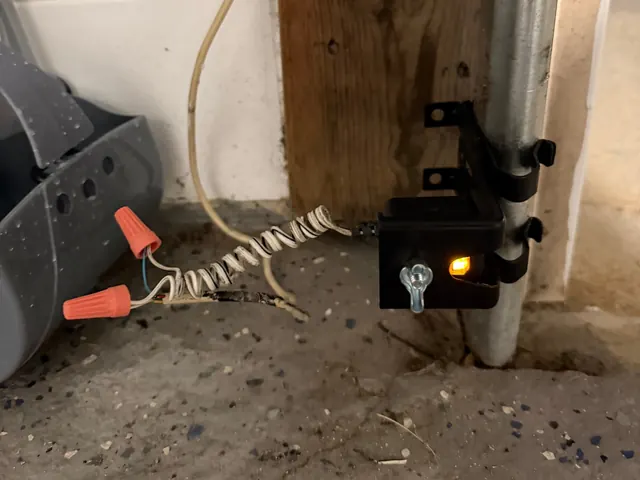
The two safety sensors, also called photo eyes, are the usual suspects. They are mounted low on the door frame, left and right, and send an invisible beam across the opening. If that beam is blocked or misread, the door won’t close from the remote.
Here is a useful clue. On many openers, holding the wall button down brings the door all the way down even when the sensors disagree. If that works and the remote doesn’t, start with the sensors. Watch the door the whole way and keep everyone clear while you try it.
The usual reasons a garage door won’t close
Notice exactly what the door does. Does it refuse to move, travel a foot and reverse, or touch the floor and go back up? That detail points to the cause.
- Something in the beam. A box, a bike, a trash can or a garden hose in the doorway breaks it. The opener light often blinks and the door goes back up.
- Sensors knocked out of line. A bumper, a broom or a stray ball can turn one sensor a little away from its partner. One of the small sensor lights then goes out or flickers.
- Sun in the sensor’s eye. LiftMaster notes that when strong, direct sunlight lands on the receiving sensor, the door may refuse to shut while the opener light blinks. It tends to come back at about the same time on sunny days, when low sun shines into the garage.
- Lock mode is on. Many wall controls have a lock or vacation button that shuts the remotes out. The wall button still works; the remotes do nothing.
- Travel limits or force have drifted. The opener remembers where the door should stop. If that setting moves, the door can press on the floor, read it as an obstacle and reverse.
- A mechanical problem. A bent track, a roller out of its track, or a broken spring or cable that leaves the opener pulling far more weight than it should.
A tired remote battery belongs on the list too. It shortens the range, so the door answers from the driveway but not from the street, and then not at all.
Checks you can safely do yourself
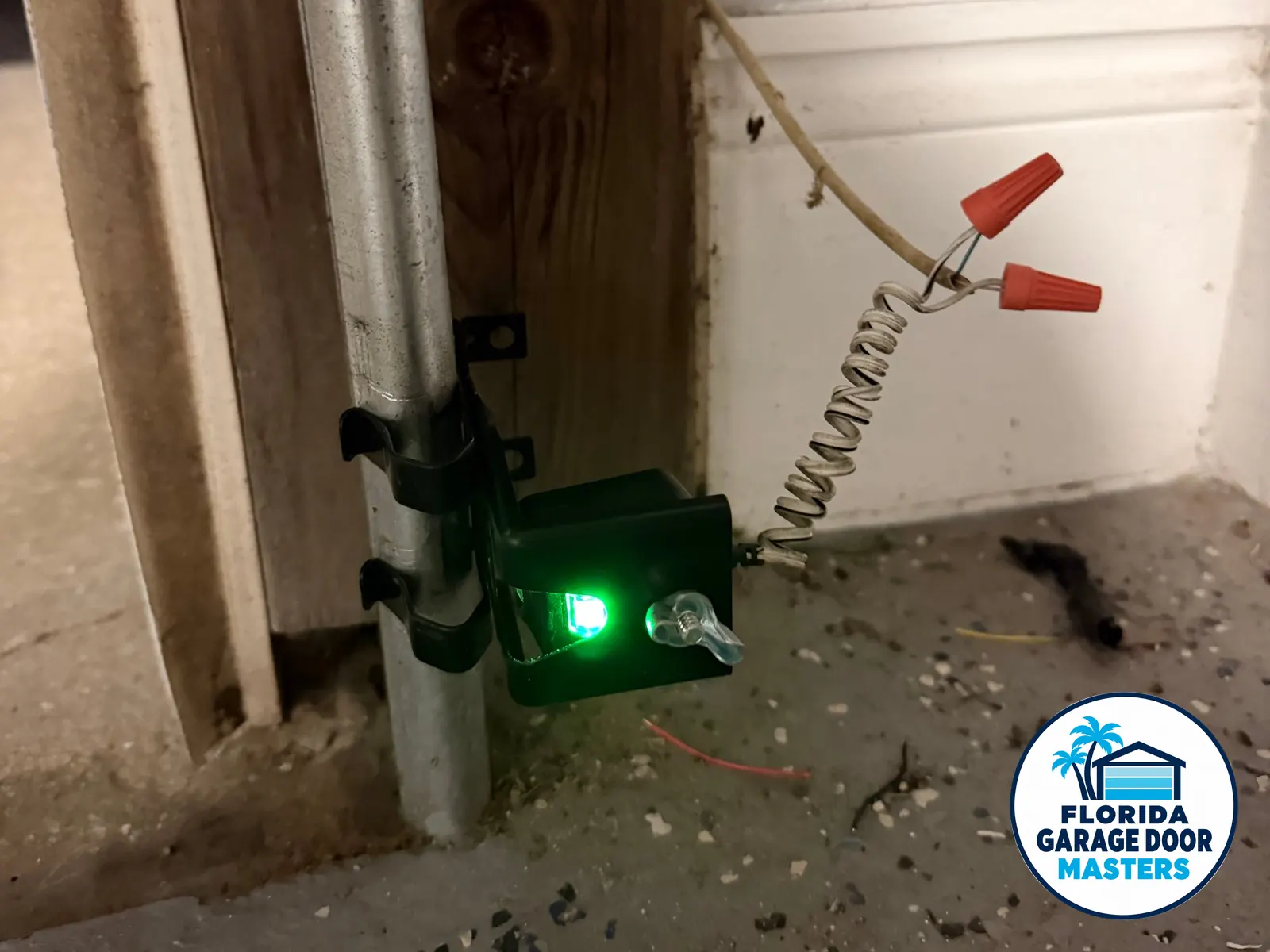
Start with the sensor lights. On many openers, one sensor glows amber or yellow when it has power and the other glows green when it sees the beam. A light that is off or blinking means the pair is blocked, dirty or pointing away from each other.
Clear the doorway, then give both lenses a gentle wipe with a clean cloth. Dust, cobwebs and water spots after a summer downpour can scatter the beam. If one sensor looks crooked, turn it gently by hand until both lights hold steady, without forcing the bracket.
If the trouble shows up only on sunny days, at roughly the same hour, suspect the sun. A short cardboard tube taped around the receiving sensor, aimed at its partner, is a fair test. The lasting fix LiftMaster suggests is to swap the sensors from side to side or to shade the receiver for good, and we can handle that on a visit.
Then the wall control. If it has a lock button or a lock light, turn lock mode off and try the remote again. Last, put a fresh battery in the remote you use most.
Signs it isn’t the sensors
Some problems look like a sensor fault and aren’t. If the door shudders, sits crooked, grinds, or has a roller hanging out of its track, stop running the opener. Every try can bend the track further or pull the door out of square. A roller that has left its track is a job for off-track repair.
The same goes for a door that suddenly feels very heavy or a cable hanging loose at one side. Springs and cables hold heavy tension. Don’t loosen, adjust or pull on them, and don’t try to lower the door by hand if a spring has snapped. Read what to do about a broken spring first.
While you test, keep children and pets out of the doorway. Never step or reach under a moving door to beat the sensors.
Calling us: what we test and repair
Call when the sensor lights stay off after cleaning, when the door reverses even with steady lights, or when the opener blinks a pattern you can’t decode. Call too when anything mechanical looks wrong. A door that won’t shut at night leaves the house open. We answer 24/7, so there’s no need to wait for morning.
On the visit we test the sensor wiring and alignment, read the opener’s error code, and check the travel limits and force. We also look over the tracks, rollers, springs and cables, because a heavy or binding door can trip the opener too. Often the fix is small: a re-aimed sensor, a repaired wire, a limit set again. When the fault is inside the opener, our opener repair page explains what we repair.
Before any work, we tell you what we found and the price. The estimate costs nothing. Call (786) 349-6912 or use our booking page. We work across Miami-Dade and Broward, including Hialeah, Doral and Dania Beach.