
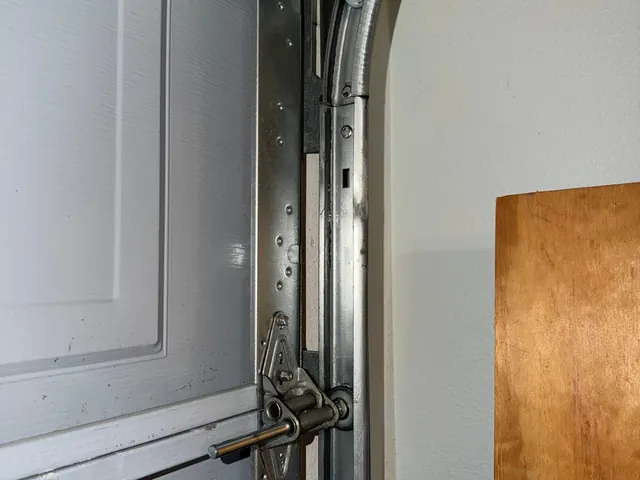
The three seals that close the gaps
Every garage door is sealed in three places. The bottom seal is a rubber or vinyl strip along the lower edge, and it presses against the floor when the door shuts. It slides into the retainer, a metal channel fastened to the bottom of the door that grips the seal along its full width.
The side and top seals are flexible vinyl strips fixed to the door frame: the jambs on each side and the header across the top. With the door down, they press against its face and close the edges. Together, the three keep out wind-driven rain, leaves, sand and the small creatures that look for shade in a garage.
Seals wear out from use and from weather. Strong sun dries rubber and vinyl until they turn stiff and crack. Near the coast, salt can also corrode a metal retainer until it no longer holds the seal in place.
How to tell a garage door seal has failed
Close the door and look at it from inside the garage, ideally in the afternoon with the lights off.
- A line of daylight under the door, at one end or across the whole width
- Puddles, wet leaves or sand on the floor after a storm
- A bottom seal that is torn, flattened, brittle or hanging out of its channel
- More bugs, frogs or lizards in the garage than there used to be
- Light or a draft along the sides or across the top of the closed door
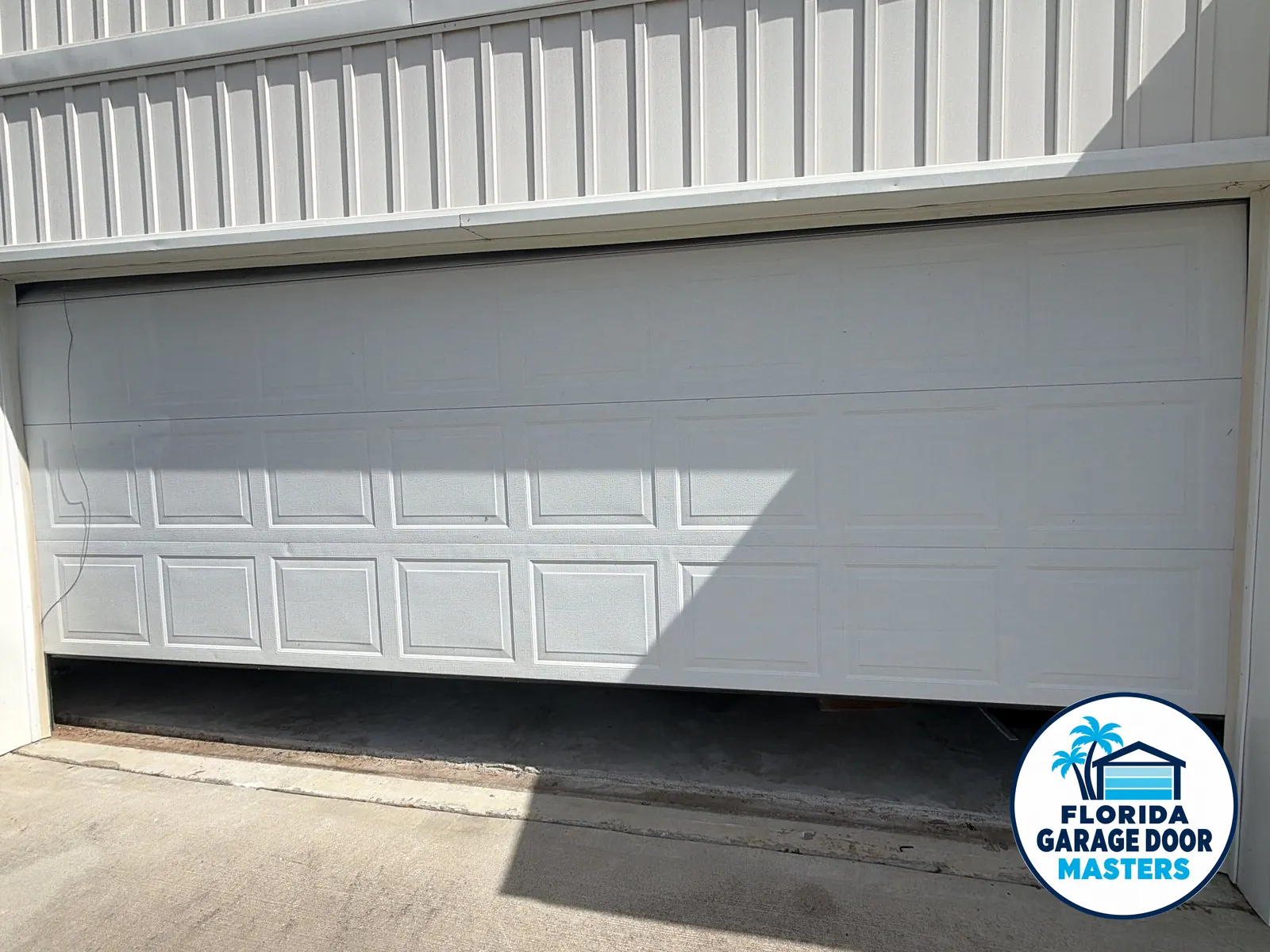
Daylight on only one side deserves a second look. It may be a dip in the floor or a seal worn at that end, or a lift cable that slipped and left the door hanging low on one side. Then the seal is not the real problem, so we check the cable and the door’s level first (see cable repair).
Fitting a seal that suits your retainer
Not every bottom seal fits every door. Each retainer channel has its own profile: some take a seal with a T-shaped edge, others a round bead along each side. Some older wood doors have the seal fastened straight to the bottom board. We look at the channel, measure the door’s width and match the seal to both.
If the retainer is bent, rusted or pulling away from the door, a fresh seal won’t sit right in it. We straighten it or fit a matching retainer, fasten it along the bottom and slide the seal through. Side and top seals are cut to length and set so they touch the door evenly without dragging on it.
Last comes the opener. A fresh seal is fuller than the flattened one it replaced, so the door touches the floor a little earlier on its way down. We adjust the down travel limit (where the opener stops the door) and the force setting, then set a block of wood under the door and make sure it reverses on touching it.
Rainy season, storms and the bottom of the door
Summer storms in South Florida often bring sideways rain, and the bottom of the garage door takes the brunt of it. A seal in good shape before June is one less way for water to get in.
Know what a seal can and can’t do. It blocks wind-driven rain and debris, but it is not a flood barrier and won’t hold back water rising outside the door. Our hurricane prep and storm repair visit looks at the seals along with the springs, tracks and hardware, and the hurricane season checklist covers what you can check yourself.
Close to the bay or the ocean, rinse the bottom of the door and the retainer with fresh water now and then, so salt doesn’t build up in the channel. The salt air guide explains the rest of coastal care.
Before you tug on a loose seal
With the door closed, you can look at the seal, sweep the floor where it lands and clear leaves from the corners. Don’t lie down or reach under a door that is moving, and don’t prop a door partway open to work on the seal.
Leave the bottom brackets alone. They sit right beside the seal at each lower corner and hold the lift cables under strong tension, so a loosened bolt there can let go hard.
If the bottom section itself has rotted or split, a seal won’t fix it, and we tell you plainly when it has come to that. A new garage door is then the lasting answer.
Seal work on the coast and inland
Seals wear differently across the county. In Miami Beach and the bayside streets of North Miami Beach and Coral Gables, salt works on the retainer while the sun works on the rubber. Inland, in Doral and Miami Lakes, it is mostly sun and summer downpours. We repair seals across Miami and the rest of our service area.
If the rollers squeal or the hinges rattle while we are there, see roller and hinge repair. A yearly tune-up keeps an eye on the seals too.
How it works
- Look for the gapWith the door closed, we check for light and wear along the bottom, the sides and the top.
- Check the retainer and levelWe see whether the channel is straight and solid, which seal shape it takes, and whether the door hangs level.
- Fit the sealsA matching bottom seal slides into the channel, and the side and top strips are trimmed to fit.
- Reset the openerWe set where the opener stops and how hard it pushes, then run the reverse test with the seal in place.