
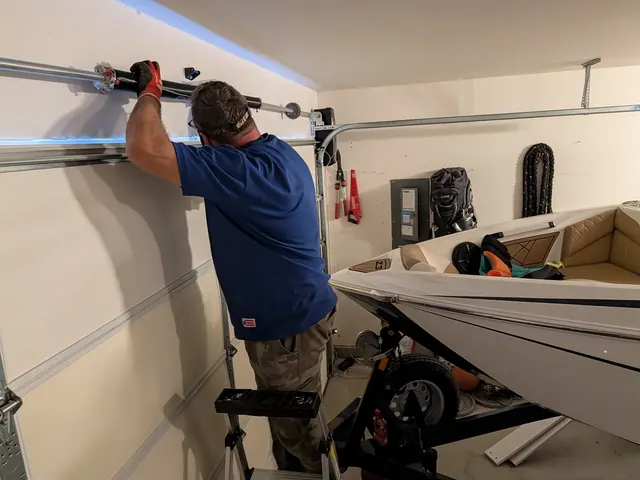
What a tune-up covers, part by part
A door that opens three or four times a day makes well over a thousand trips a year, and every trip wears the same few parts a little. Many breakdowns start as something nobody noticed: a roller that stopped turning, a hinge bolt working loose, a spring slowly losing tension. A tune-up is a visit to find those things while they are still small.
Here is what we go through, in order:
- Lubrication of the rollers, hinges, bearings and springs. The tracks get wiped clean, not greased.
- A balance test with the opener disconnected (see the questions below).
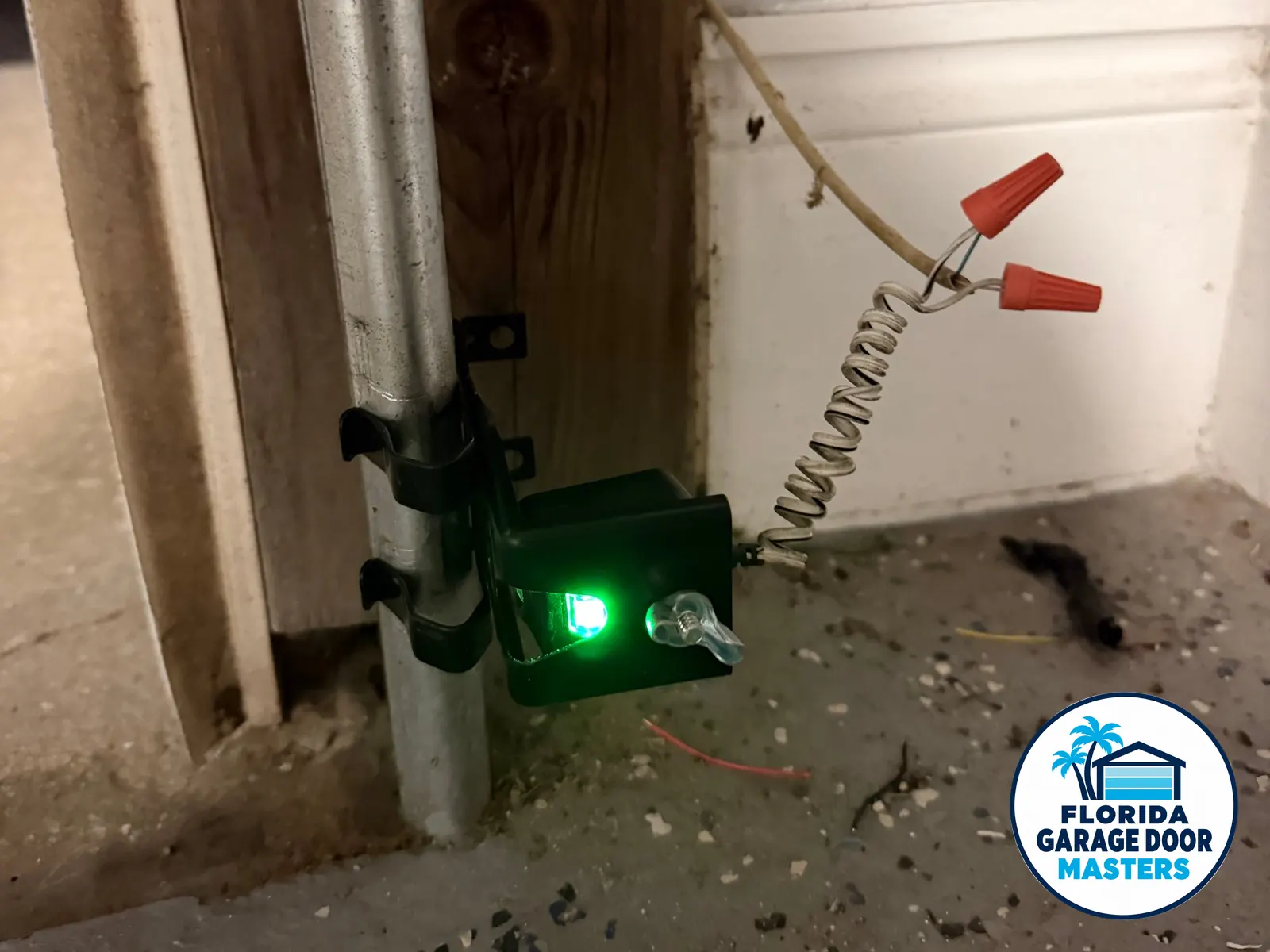
- The safety sensors (the two photo eyes near the floor) and the auto-reverse: a closing door has to stop and rise again the moment it touches an obstacle.
- Hinge, track and bracket bolts, tightened where the door’s vibration has loosened them.
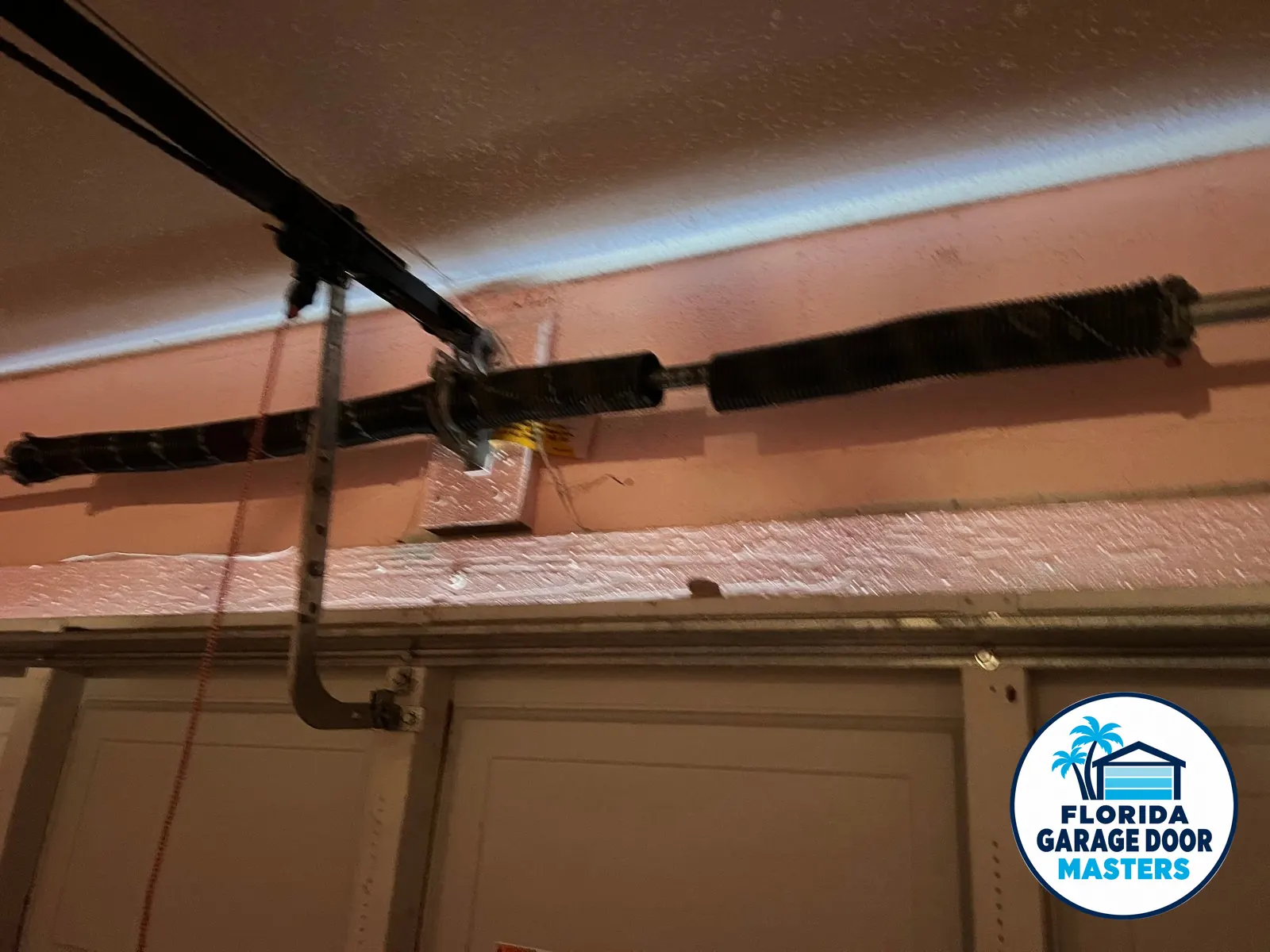
- A close look at the torsion springs (the big coils on the bar above the door), the lift cables, the cable drums and the bottom brackets for wear, fraying and rust.
- The opener’s travel limits (where it stops the door at the top and bottom), its force setting, the chain or belt, and the wall button.
- The bottom seal and the side and top seals.
You hear the price of the tune-up before we start. If a part is worn past adjusting, we show it to you and price that repair separately, so you can say yes or no to each one.
Signs your door is asking for attention
You don’t need tools to tell when a door is due. Stand inside the garage and watch it make a full trip up and down, then listen to it.
- Grinding, squealing or a steady clunk as it moves, usually from dry or worn rollers and hinges
- A jerky start, or a shudder partway up
- One side rising ahead of the other, or a gap under one end when it closes
- An opener that strains or slows near the top, a hint that the springs no longer carry their share
- Rust on the springs, on the cables near the bottom corners or on the bottom brackets
- A door that reverses for no reason, or fails to reverse when something is in the way
Any of these is a good reason to book a tune-up. A sudden bang followed by a door too heavy to lift is different: that is a repair. Read about garage door spring repair and call us before using the door again.
How often a Miami-Dade door needs a tune-up
Once a year is a common rule of thumb for a house with one or two cars. A door that runs many times a day, for a big household or a home business, wears out sooner and can use a visit twice a year.
Near the water, salt matters more than mileage. One large door maker’s care guide asks for cleaning at least twice a year, and four or more times a year in coastal areas, because salt left on the metal turns into surface rust. Homes near the bay in North Miami Beach or Coral Gables should rinse the door between visits, and our salt air care guide explains how.
Timing helps too. With storm season opening on June 1, April or May is a sensible time for the yearly visit, so the door starts the season tight and balanced. Our hurricane season checklist lists the things you can look at yourself.
Safe checks you can do between visits
Some checks are safe for anyone. Look at the two sensors near the floor on each side of the door: their lights should be steady, not blinking. Wipe the lenses with a soft cloth when dust or cobwebs build up.
Leave the springs, the lift cables and the bottom brackets alone. The bottom brackets are the plates at the lower corners where the cables attach, and they carry the full pull of the springs. Loosening a bolt there can release that tension in a split second.
If you ever pull the red emergency release cord, do it with the door closed. A door with a weak spring can drop hard the moment the opener stops holding it.
When the tune-up finds something bigger
Sometimes a tune-up turns up a part that adjusting won’t save: a cracked roller, a frayed cable, a spring with a gap in the coils. We point it out, explain the repair and the price, and you decide. Worn rollers and hinges are covered on our roller and hinge repair page, and a torn bottom seal on weather seal repair.
Now and then a door is simply worn out, with rust eaten through the bottom or panels that have split. We say plainly when a door has reached that point, and new garage door installation is work we do as well.
We do tune-ups across Miami-Dade, from Miami and Miami Gardens to Sunny Isles Beach, and in Broward from Dania Beach and Hollywood inland to Miramar.
How it works
- Mention what you’ve noticedCall or book online and tell us about any new noise, a slow opener or rust. We call back to set the visit time.
- Watch, listen, liftWe watch the door make a full trip, then disconnect the opener and lift the door by hand to feel its balance.
- Lubricate, tighten, adjustMoving parts get lubricant, loose bolts get tightened, and the sensors, travel limits and force are set.
- Test and reportWe run the auto-reverse test, then show you anything worn and what a repair would involve, with its price.