
What salt air does to a garage door
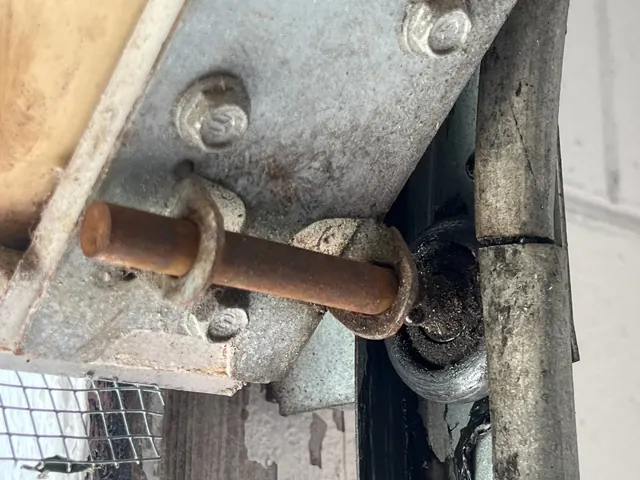
Near the coast, salt air and your garage door meet every day. Breezes off the water carry fine salt that lands on every metal part and holds dampness against it. On steel, that means rust, and it begins where water lingers longest: fasteners, hinge pins, roller stems, cable ends and the bottom brackets.
Door makers warn about this in their care instructions. One large maker notes that skipping cleaning in high-salt surroundings can lead to surface rust. Its care guide asks for a wash at least twice a year, rising to four or more times a year for coastal homes. Some makers' paperwork may not cover salt damage at all.
FEMA's hurricane guidance makes the same point about buildings. It says salt spray corrodes metal connectors and fasteners, and where a building stands less than roughly 3,000 feet from the shore, it calls for fasteners of hot-dipped galvanized or stainless steel. A garage door's hardware lives in that same air.
Where rust shows up first
Rust rarely starts on the face of the door. It starts on the small parts that do the work, and each gives its own warning.
- Lift cables and bottom brackets: they sit lowest, close to the wet floor and the bottom seal. Look for orange staining or broken strands near the lower end of each cable.
- Springs: rust shows as orange or dark flaking on the coils, and a rusty spring often squeals as it winds and unwinds.
- Rollers and hinges: roller stems and hinge pins stiffen as they rust, and the door starts to shudder, grind or squeak on every trip.
- The bottom seal and its retainer: the metal strip holding the rubber can corrode, and a hardened seal lets sand, water and salt under the door.
- Safety sensors (photo eyes): a film of salt and dust on the two small lenses near the floor can make them blink or send the door back up.
Homes closest to the water feel it most. That means Miami Beach between the ocean and the bay, Aventura and North Miami Beach along the Intracoastal, Sunny Isles Beach and Hollywood on the Atlantic, and the bayside parts of Miami and Coral Gables. Farther inland, salt matters less, but the routine below still keeps a door clean and quiet.
A salt air care routine for coastal homes
None of this needs special tools. Work with the door closed and the opener unplugged, so nothing moves while your hands are near it.
- Rinse and wash. Hose the door down with fresh water, wash it with mild soap and a soft brush or cloth, then rinse it well. Skip the pressure washer: it can strip the finish and push water past the seals.
- Keep to a schedule. Close to the water, plan on a wash about every three months, and add an extra rinse after a storm blows spray inland.
- Wipe the safety sensors. Clean the lens on each of the two sensors near the floor with a soft, dry cloth.
- Lubricate what you can reach. A light spray of garage door lubricant on the hinges and on the stems of steel rollers keeps them turning. Wipe the tracks clean rather than greasing them.
- Look once a month. Check the cable ends at the bottom corners and the coils above the door for fresh rust, and listen for any new noise.
Rust that needs a repair, not a rag
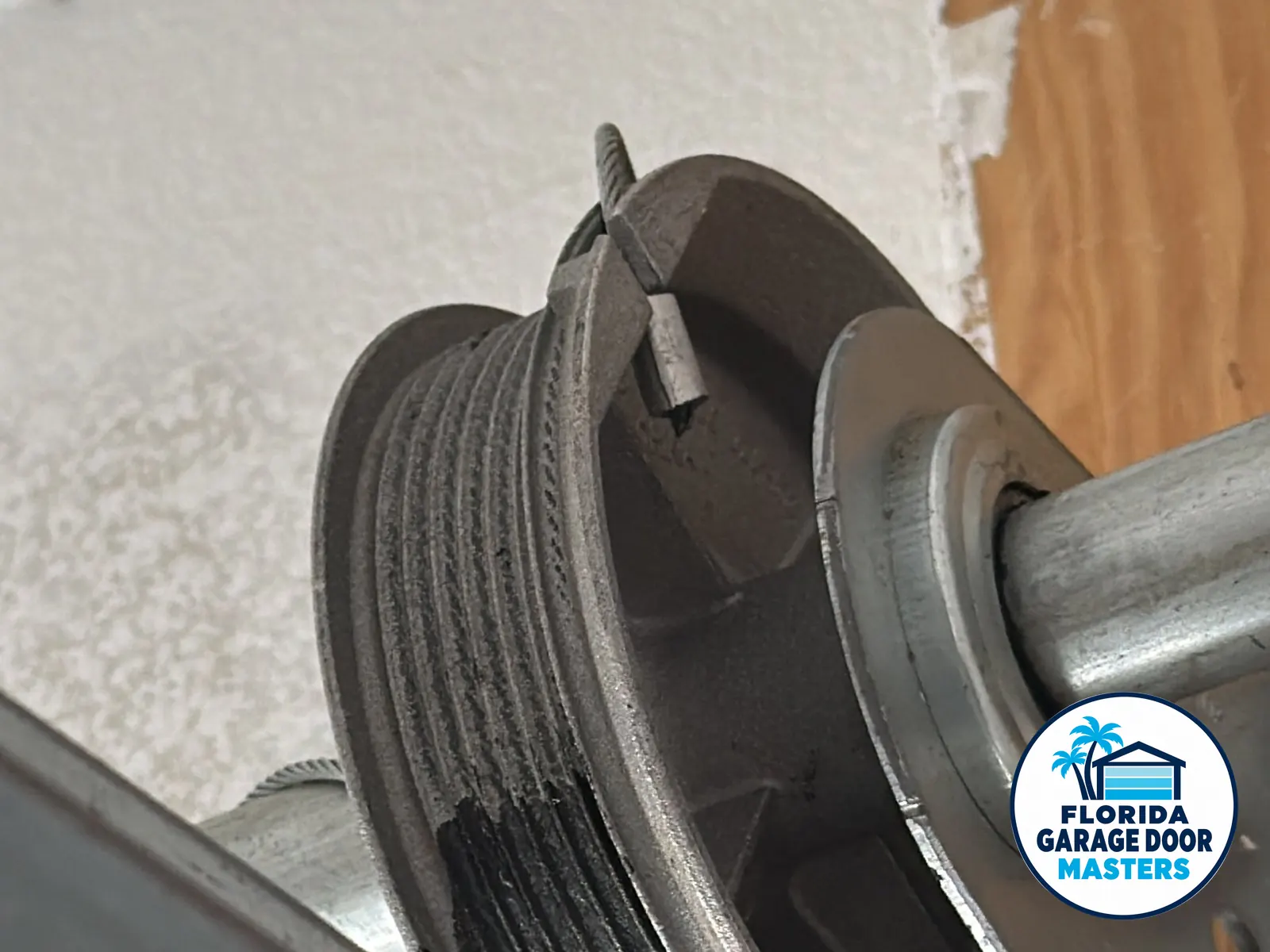
Some rust is past cleaning. A cable with broken strands, a bottom bracket eaten thin, a spring rusted deep into its coils, or a roller that no longer turns should be repaired, not scrubbed. Never take a wire brush to a cable or loosen a bracket yourself: the springs keep those parts under heavy tension, and they can let go without warning.
A frayed cable, or a door sagging at one corner, means the opener stays off and people and cars keep their distance. Call us, and leave the red release cord alone as well.
We fix rusted parts with matching ones, sized for your door and its track. Our roller and hinge repair page covers noisy, seized rollers, and weather seal repair covers a bottom seal that lets water in.
If rust has eaten through the door's own skin, the job is no longer about parts, and we say so. Then a new garage door with rust-resistant hardware is the lasting fix.
Parts that hold up better near the coast
When a worn part has to be replaced anyway, some choices last longer in salt air:
- Galvanized or coated springs and lift cables, which stand up to surface rust better than bare steel.
- Nylon rollers with sealed bearings, which leave less bare metal in the track, though the stems still need rinsing.
- Stainless steel or hot-dipped galvanized hinges and fasteners, the kinds FEMA points to for buildings near the shore.
- A belt drive instead of a chain on the opener, since a steel chain is one more thing for salt to work on.
We tell you which of these suit your door, and what each costs, before we fit anything.
A coastal tune-up and where we work
A tune-up handles the parts of the routine that belong to us. We clean and lubricate the moving parts, springs included, and look over the cables, drums and bottom brackets for rust. Then we tighten loose hardware and finish with a balance test and a run of the sensor and auto-reverse checks.
We suggest one a year, and the weeks before hurricane season are a sensible time for it; our hurricane season checklist covers the rest. We work the whole coast, from Aventura and North Miami Beach down to the bayfront of Coral Gables, plus Hollywood, Hallandale Beach and the rest of Broward. Contact us to set up a visit.