
Why the warning signs matter
A garage door is a heavy panel balanced by springs, guided by rollers and moved by an opener. Each of those parts wears a little with every trip, and most of them change how the door sounds or moves well before they fail outright.
So the signs your garage door needs repair are mostly things you can hear and see from a safe spot. You don't need tools, and you shouldn't touch the springs, the cables or the brackets at the bottom corners, which hold heavy tension.
The lists below sort the signs into sounds, things you can see and changes in how the door moves. Then comes a short check you can do once a month, and a guide to which signs can wait for a visit and which can't.
Sounds that point to a worn part
Listen to one full trip from inside the garage, standing clear of the door:
- A loud bang, like a firecracker, usually means a torsion spring has snapped. Don't try to open the door: the spring is what made it light enough to lift.
- Grinding or rumbling as the door moves often comes from rollers with worn or dry bearings.
- Squealing or squeaking tends to mean dry hinges or roller stems that need lubricant.
- Scraping in one spot suggests a roller catching on a bent or shifted track.
- Popping or clunking at the curve of the track can mean a hinge has split, or a roller has worn flat on one side.
Noise from rollers and hinges is usually a simple fix through roller and hinge repair. A bang is not: treat it as a broken spring until someone has looked.
Signs you can see from the floor
With the door closed and the opener off, take a look around:
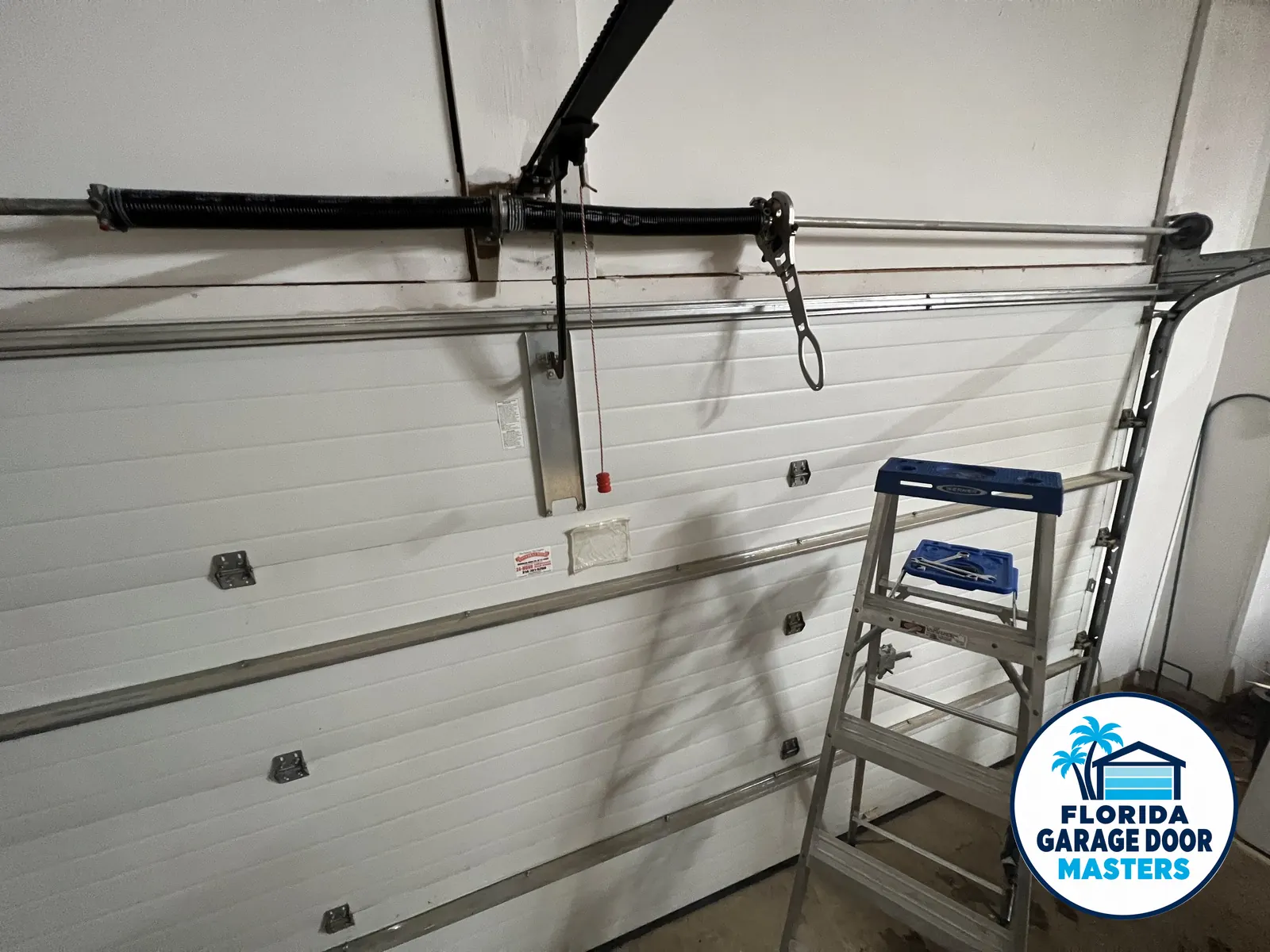
- A gap in the coil over the top of the door, on the shaft: a broken torsion spring.
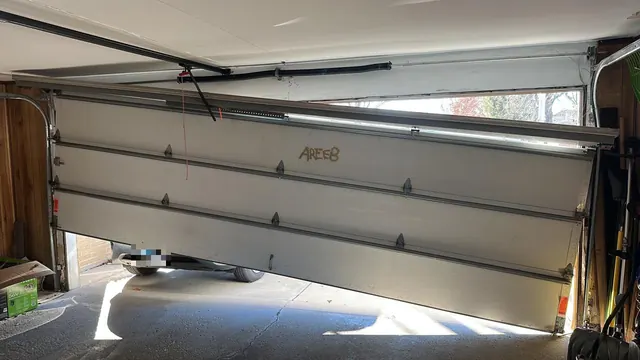
- One side lower than the other, or the door sitting crooked: a cable off its drum or a broken spring on one side.
- Rollers outside the track, often at the curve or near the floor: the door is off track.
- Frayed or rusty cable strands near the bottom corners, where rainwater sits.
- Daylight under the closed door, or a bottom seal that is torn or flattened.
- Sagging between sections, or hinges with cracks around their screw holes.
Near the bay or the ocean, rust on springs, cables and hinges shows up sooner, so look a little more often. Our salt air care guide covers what helps.
Changes in how the door moves
It shakes or jerks. Worn rollers, loose hardware or springs that have lost some of their pull are the usual causes.
It moves slowly or stops partway. A weak spring, a binding track or an opener working too hard can each do it. An opener isn't meant to do the heavy lifting.
The opener hums and nothing happens. Think of a worn-out drive gear, a trolley that has come unhooked or a broken spring.
It reverses before it closes. Dirty or misaligned safety sensors are the first suspect, then the opener's force or limit settings. Our page on a door that won't close walks through it.
A monthly check that takes two minutes
First, watch the door make one trip up and down and listen for anything new. Then look at the two small sensors near the floor: on many openers, both lights should glow steady.
Last, test the auto-reverse. Lay a short piece of two-by-four flat across the doorway and close the door with the opener. When the bottom edge reaches the wood, the door should stop and rise again. If it presses down on the board instead, stop using the opener until it has been looked at, and keep children and pets well away from it.
Stop now, or book a visit?
Some signs mean stop using the door today: a bang, a door hanging crooked, a loose or snapped cable, rollers that have left the track, or a door that won't reverse. Keep it closed if you can, leave the opener off, and call (786) 349-6912.
Others can wait a few days for a visit: a squeak that lubricant doesn't cure, a slow or jerky opener, worn seals, light rust. Booking early keeps them small. Our garage door repair page lists every repair we do, and you can book a visit online. We cover Miami-Dade and Broward.