
Torsion vs extension garage door springs, in short
Every sectional garage door hangs on springs. They carry most of its weight so that an opener, or one hand, can move it. Without them, even a single-car door weighs more than anyone should try to hold up.
The comparison of torsion vs extension garage door springs comes down to where the spring sits and how it stores its force. A torsion spring twists around a shaft; an extension spring stretches like a giant rubber band. Most newer doors use torsion springs, while extension springs turn up more on older and lighter doors.
Which kind you have changes what a failure looks like, what the repair involves and what to watch for between visits. The rest of this page goes through each one.
How a torsion spring lifts the door
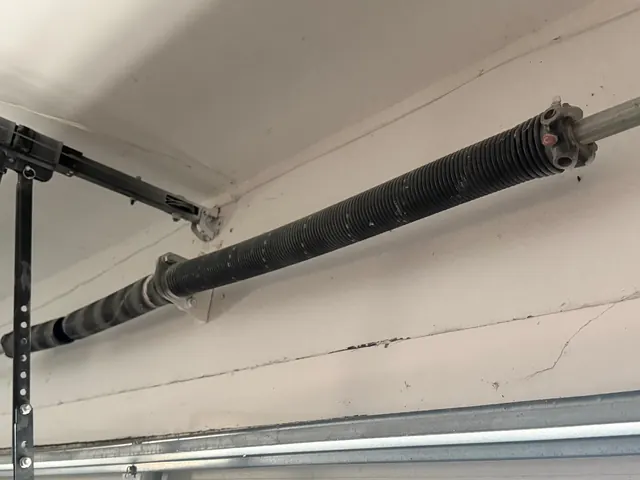
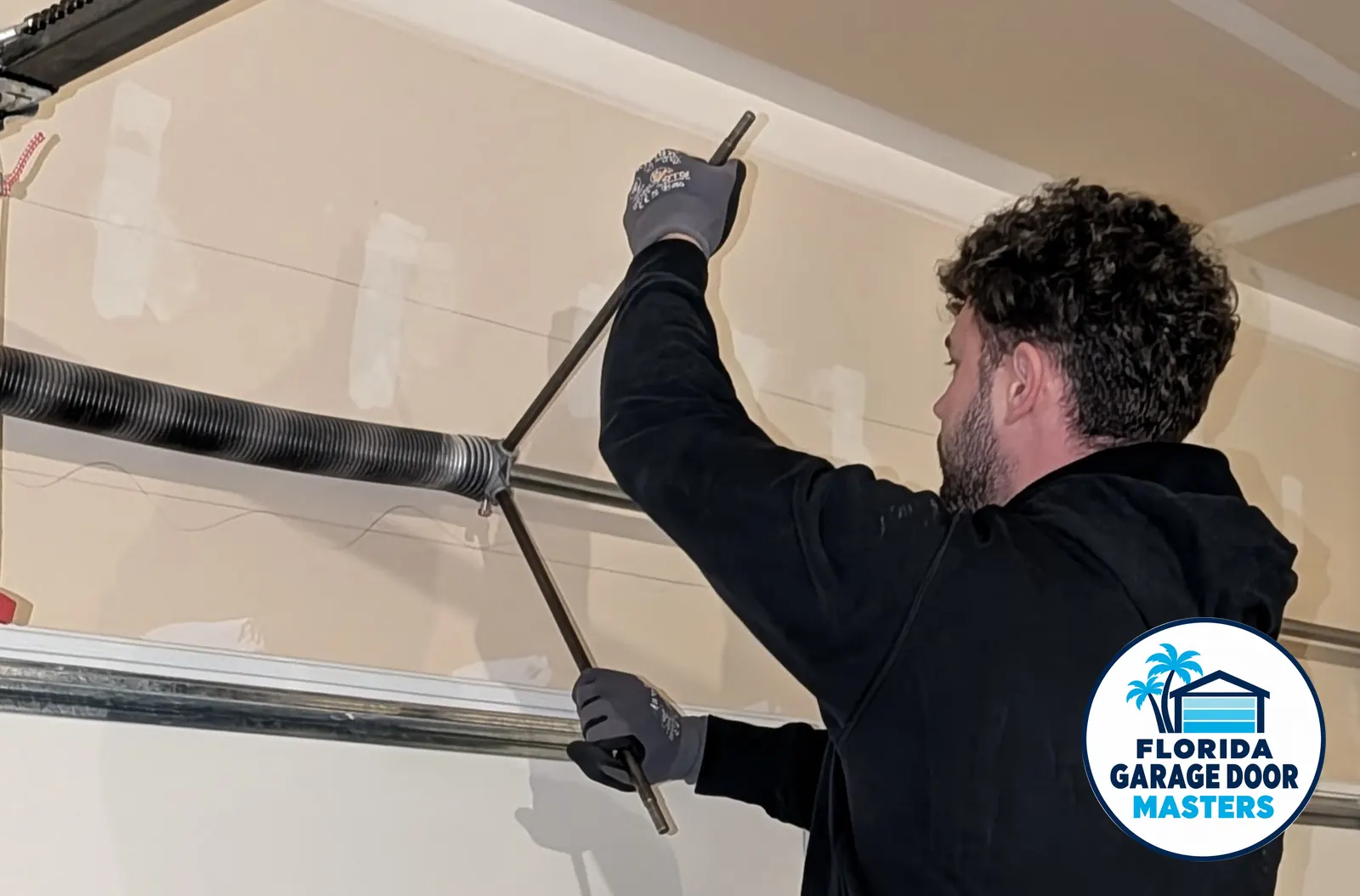
A torsion spring is a tightly wound coil slid over a steel shaft that runs along the top of the door opening. One end is fixed to a bracket on the wall above the door, and the other end grips the shaft. As the door closes, the cables at its two lower corners turn the shaft and wind the spring tighter.
When the door opens, the spring unwinds and turns the shaft the other way, and grooved drums at each end wind the cables back up. Wide or heavy doors often carry two torsion springs on one shaft; lighter doors may have one.
Because the force is spread along the shaft, the door rises level and under control. When a torsion spring breaks, the pieces stay on the shaft, which is one reason this design is seen as the safer of the two.
How extension springs do the same job
Extension springs run alongside the horizontal tracks near the ceiling, one on each side. A cable runs from each spring over a pulley and down to the bottom corner of the door. As the door closes, the springs stretch, and as it opens, they pull back and lift it.
They work as a pair. A steel safety cable should run through the middle of each spring, anchored at both ends, to catch the pieces if the spring breaks. Without one, they can fly across the garage.
Extension springs do the job, but the lift is less even, and the pulleys and extra cables add parts that wear. As they age, the door can start to jerk or rise unevenly.
Side by side: what the difference means for you
Here is how the two compare on the things a homeowner notices:
- Where to look: torsion springs sit on the bar above the closed door; extension springs stretch out beside the ceiling tracks.
- How the door moves: torsion doors usually rise more smoothly; extension doors can jerk or tilt as the springs tire.
- What a break looks like: a torsion spring shows a gap in its coil; an extension spring hangs slack on its safety cable, or falls if it has none.
- Wear: both kinds wear by the trip, and one full cycle is an opening plus a closing. A standard spring tends to be good for around 10,000 of those.
Neither type is a do-it-yourself job. A wound torsion spring and a stretched extension spring both hold enough force to cause serious injury, and so do the cables and bottom brackets they pull on.
Signs either kind of spring is giving out
The warning signs are much the same for both types:
- A loud bang from the garage, often with nobody touching the door.
- A gap in a torsion coil, or an extension spring hanging loose.
- A door that suddenly feels heavy, or that rises a few inches and stops.
- An opener that strains, hums or reverses as the door starts up.
- Cables hanging slack, or the door rising crooked.
If you see any of these, keep the door closed and the opener off. Our broken spring guide covers the first steps, and if a car is stuck inside, ask for emergency repair when you call.
What we do about a broken or tired spring
We match the new spring to the door's weight, height and drum size. When a door has two springs, replacing them together is usually the smart move, since they have aged together. On extension doors, we add safety cables wherever they are missing. Many doors with extension springs can also be switched over to torsion springs, and we can tell you on a visit whether yours is a good fit.
Then we balance the door by hand, reconnect the opener and run the safety tests. The visit is laid out in detail on our spring repair page. Many spring jobs can get same-day service. We fix both kinds of spring across Miami-Dade and Broward, and you can book a spring visit online.