
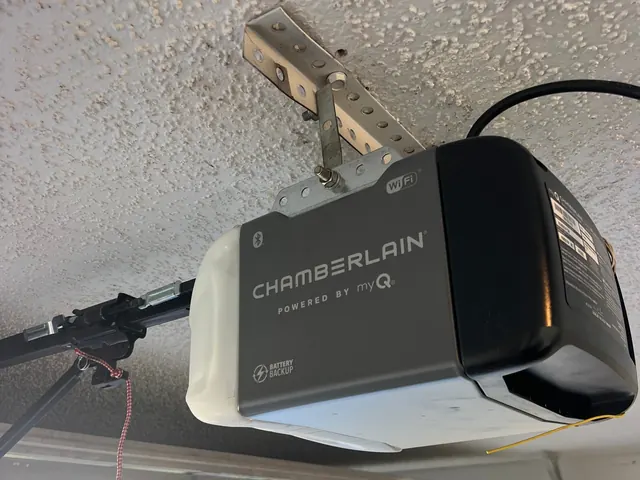
Start with the door, not the opener
Knowing how to choose a garage door opener begins one step earlier: with the door it will move. An opener is built to guide a balanced door up and down. The springs are what carry the weight, so a motor hooked to a door with tired springs strains, wears its gears and fails early.
So before you shop, check the balance, or have it checked. With the door closed and the opener disconnected, a balanced door lifts easily by hand and stays put about halfway up. If it is heavy or drops, the springs need attention first, whatever opener you pick.
Then think about the garage itself: is there a bedroom above it or beside it, is the ceiling free or full of storage racks, and how often does the door run each day? Those answers point to the right drive.
Chain, belt or wall-mount: the three drives
Residential openers come in three main drive types, and each suits a different garage:
- Chain drive. A metal chain, much like a bicycle's, pulls the trolley along the rail. It is tough and handles heavy doors well. It is also the loudest drive, which matters less in a detached garage or one far from bedrooms.
- Belt drive. A reinforced rubber belt does the pulling, and the motor runs far more quietly. It is the usual pick when people sleep or work in a room over the garage.
- Wall-mount (jackshaft). The motor sits on the wall beside the door and turns the torsion shaft directly, with no rail across the ceiling. That leaves room for storage racks, a high ceiling or a car lift, and it runs quietly. It needs a door with a torsion spring shaft.
If the garage is attached and anyone is bothered by noise, a belt or wall-mount drive is usually worth it.
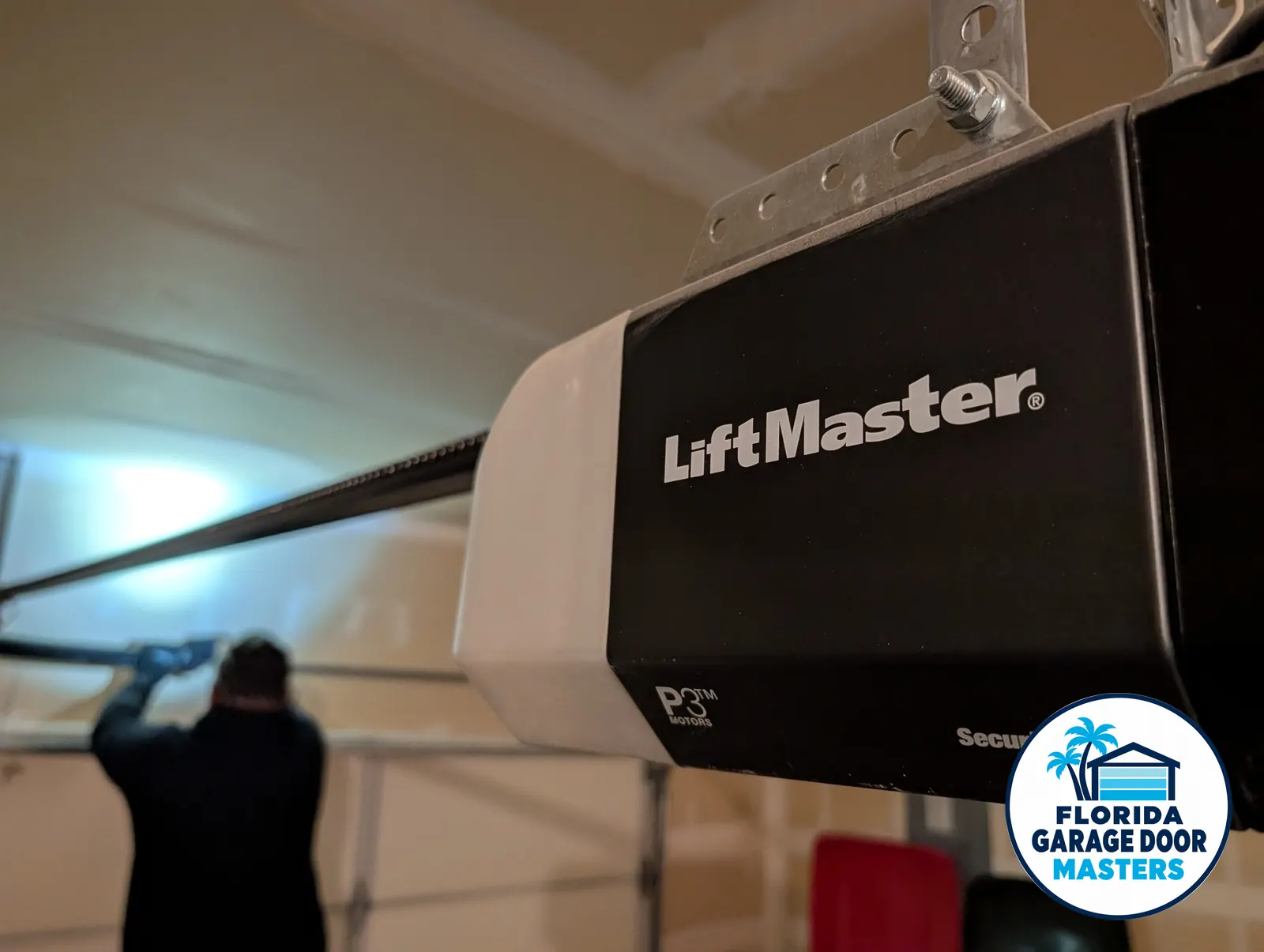
Motor power and the weight of your door
Most single and double home doors run well on a standard residential opener. Heavier doors, such as insulated models or the impact-rated doors common in this hurricane zone, may call for a stronger motor, so tell us which door you have.
Many newer openers use DC motors that start and stop softly, which is easier on the door and quieter in the house. Still, power is no substitute for good springs: an opener that strains is usually telling you the springs need service, not that it needs more muscle.
A battery backup for storm season
Summer storms and hurricanes knock the power out, sometimes for days. With a battery backup, the opener can still make a number of trips during an outage, so you are not pulling the release cord in the rain.
The battery is a wear part. LiftMaster puts its life at about a year or two, and many units beep when it runs low. Test it before June by unplugging the opener and running the door once. Our page on the garage door after a power outage covers what to do when the battery is flat.
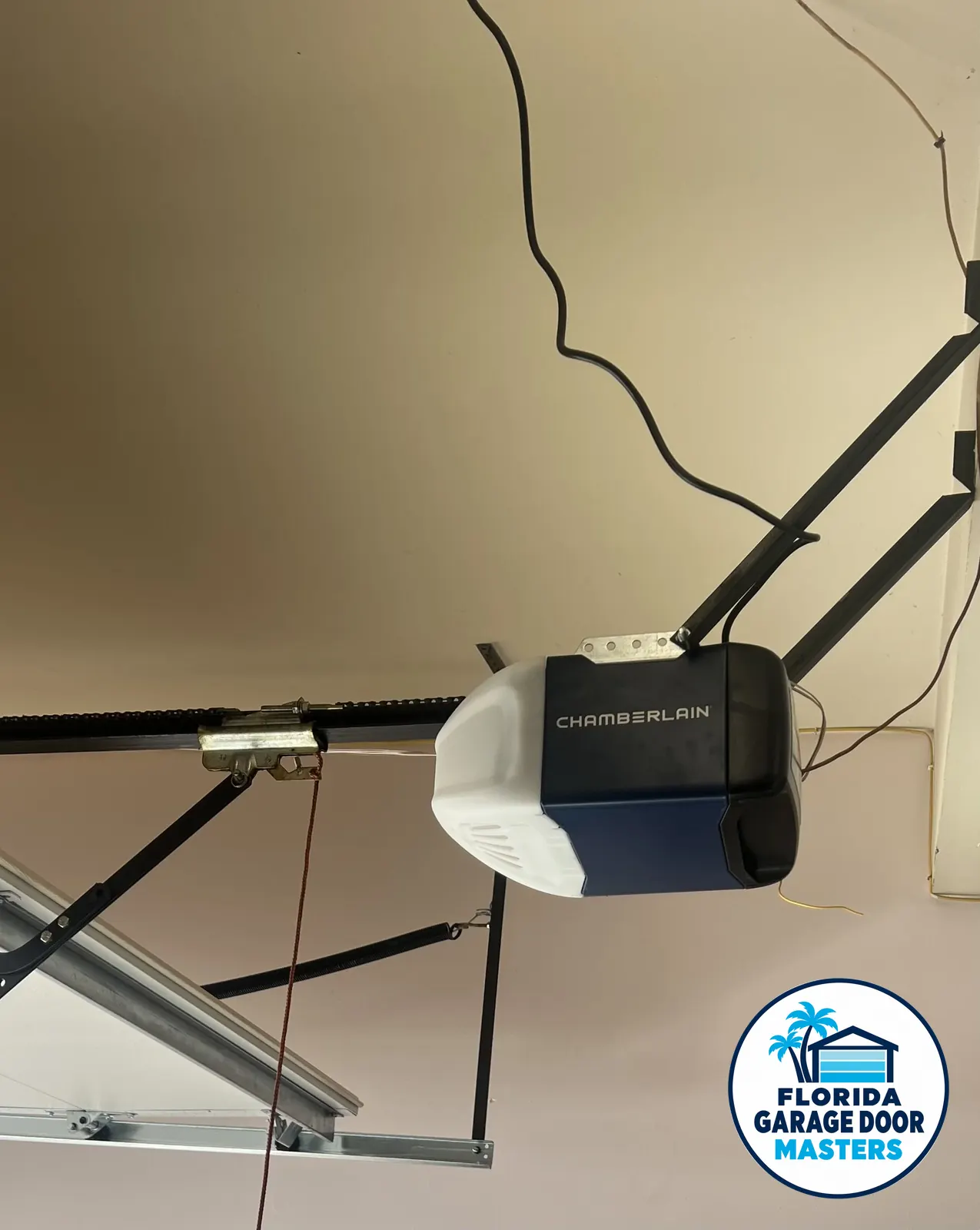
Smart features worth paying for
Not every gadget earns its place, but a few do:
- Wi-Fi control and alerts on your phone, through apps such as myQ on LiftMaster and Chamberlain units, so you can check whether the door is shut from anywhere.
- Scheduled closing on some models, so a door left open by mistake shuts itself at a time you set.
- A wireless keypad for family members without a remote; see remote and keypad help for programming.
- Built-in LED lighting, and a camera on some models, for a garage you can see into before you open it.
Safety sensors and auto-reverse come first
Whatever you choose, it must have working photo eyes, the pair of safety sensors mounted low on each side of the opening. It also needs auto-reverse, the feature that stops a closing door and lifts it again when it meets something. Check both about once a month: set a flat board on the floor in the door's path and run the door down. On contact with the board, the door should go back up.
If the door refuses to come down even with clean sensors, our door won't close guide lists the usual culprits.
Repair the old opener, or fit a new one?
Many openers fail one part at a time: a stripped gear, a logic board, a misaligned sensor. Those can usually be fixed. If yours is loud, keeps breaking, has no safety sensors or uses parts that are no longer made, a new opener tends to be the better value.
We do both, and we tell you which one makes sense for your door; see opener repair and installation. To have a technician look at your opener, book a visit or call (786) 349-6912.